Object-Oriented UX (Part 1): The Basics of Grouping and the "Why"

What is Object Oriented User Experience (OOUX)
OOUX is a design methodology that structures all the elements a user can interact with (whether physical, graphical, or informational) into distinct "objects." It involves grouping these objects into categories, defining their parameters (attributes), and subsequently establishing their connections (relationships) and functions. This creates a logical workflow and significantly simplifies the understanding of information.
It is like a puzzle or building blocks. When you connect one piece, you create the space to think about more and more connections.
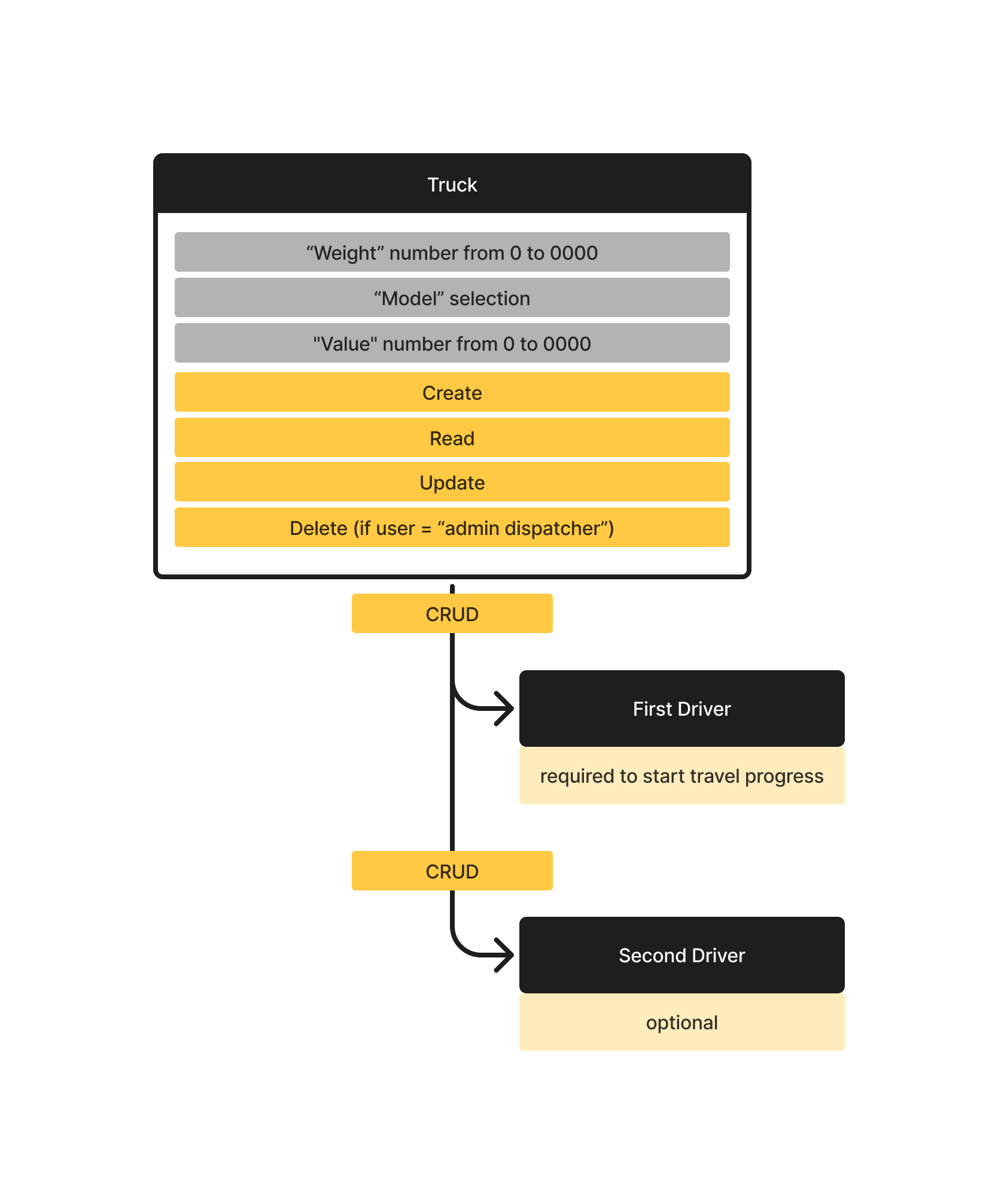
Example: Objects: Truck; Attributes: Dimensions, Make, Model; Connections: 1 Truck Owner, up to 2 Truck Drivers, Load Order. Actions: Create, Read, Update, Delete (if Admin), Assign Driver, Update Driver, Remove Driver.... as a small example.
About My Approach
While common approaches exist, I have developed my own logical way of applying OOUX since joining a startup in 2017. It was this mindset that helped me structure complex information and eventually led to the creation of the Object-Oriented Journey Mapping (OOJM) method (which I will cover in the next article).
But for now, let's focus on the definition and the "why."
My Thoughts
I believe the Object-Oriented UX approach has become increasingly popular because of psychology and the way we subconsciously scan information. Our brains crave simplicity; we are eager to understand things quickly and easily right from the start.
We want to save time on the task itself rather than spending energy just trying to figure it out. We are lazy creatures, after all! BUT laziness is a part of what drove progress forward from sticks and bricks to automations in all the forms.
If next time someone will tell you you are lazy, remember - we all are and just think of how what you do not want to do can be automated ;)

The Psychology Behind the Grouping
Grouping items into categories and giving them clear names simplifies this process of understanding by... well, a lot (one day I will do research around this process).
Basically, as for me, Object-Oriented User Experience (OOUX) sits in the same room as the Gestalt principles we all know about.
If you are a UXProduct Designer or Researcher interested in the object-oriented approach, I highly recommend you read about it. As basic psychological principles are the pillars of our work; they influence how we communicate information across interfaces, presentations, and ..... even casual conversations.
Personally, I am into learning the basics and principles, as it helps you adapt to different scenarios without the need to learn each new method by heart (and when something falls "outside the box," you are lost).
Human psychology and ergonomics remain almost the same; they are simply adapted to the conditions humans are in, or the patterns we need to follow according to new technology. Technology nowadays follows a lot of laws that were created way before computers. Think about it.
"Technology changes rapidly; people change slowly." - Donald Norman
GROUPING will help you understand information much more effectively and quickly. As a result, this simplifies the experience for the user and makes it much easier to focus.
Recommended resources:
- Principles of Gestalt Psychology by Kurt Koffka – This is for you if you want to dig into the details and the source of perception principles. Note: it is a very academic text.
- A Century of Gestalt Psychology in Visual Perception – An academic paper. Link
- Course by IDF – Gestalt Psychology and Web Design: The Ultimate Guide. Through this link, you can get 3 months of membership for free. (I have personally been a part of IDF since 2017).