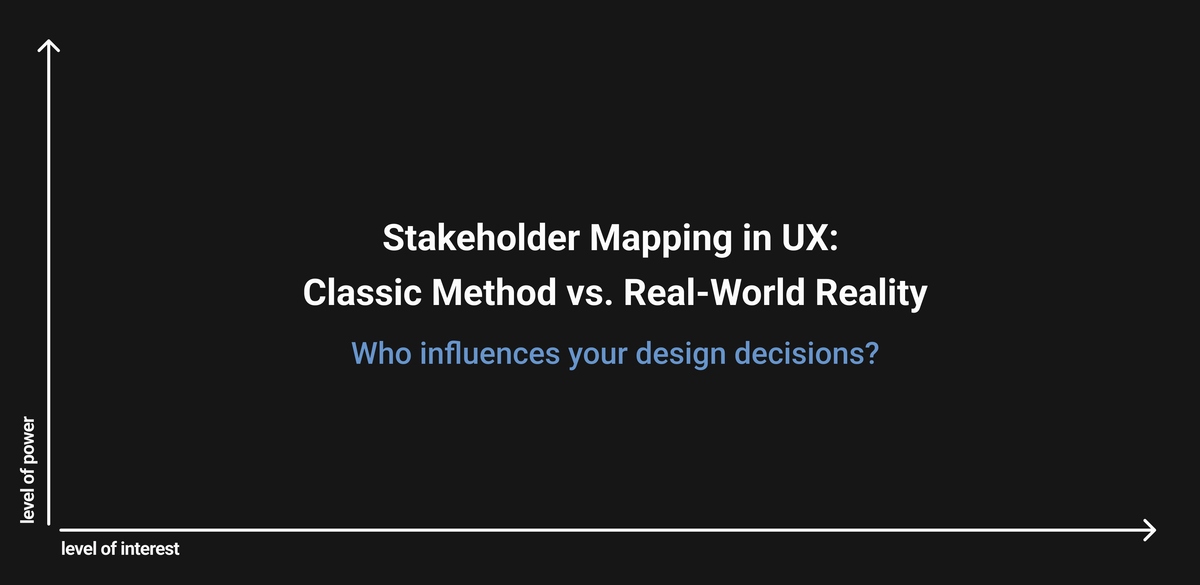
Stakeholder Mapping in UX: Classic Method vs. Reality

Stakeholder mapping is an interesting method that can be very useful for soft skills development, like empathy, and even analysis.
It helps you understand who actually influences the product, how to communicate with different people, and how to avoid wasting time, energy, and context.
This article breaks down the classic approach (as it’s taught in strategic management), and offers an alternative version that I use in real life, especially in fast-paced environments or startups where “there’s no time for this.”
A brief origin story
The original stakeholder matrix was introduced by Colin Eden and Fran Ackermann in their 1998 book Making Strategy: The Journey of Strategic Management.
It’s a visual map that groups people based on their level of power and level of interest, and helps you define how to interact with them. Over the years, it’s been adapted to product strategy, UX, project management, and communication planning.
The classic 3-step process
This is the structured version usually applied in large companies or agencies with well-established processes.
Step 1: Stakeholder Brainstorm
This starts with a team call or in-person meeting. The process looks like this:
- Each team member takes 5–10 minutes in silence to list everyone they believe influences the design process.
- Then, one by one, everyone briefly presents their names (1–2 lines per person).
- As a group, you cluster duplicate or similar roles together.
This step activates team memory, includes multiple perspectives, and brings empathy into the picture by reminding us of the people we often overlook in day-to-day work.
Step 2: Prioritization on a matrix
Once all names are gathered, the team organizes them into a matrix with two axes:
- Power (influence over the process/outcome)
- Interest (level of involvement or care)
This gives us four key stakeholder types:
- High Power / High Interest → Full involvement & active management
- High Power / Low Interest → Keep informed if everything is on track
- Low Power / High Interest → Keep informed & include selectively
- Low Power / Low Interest → Monitor without overloading them
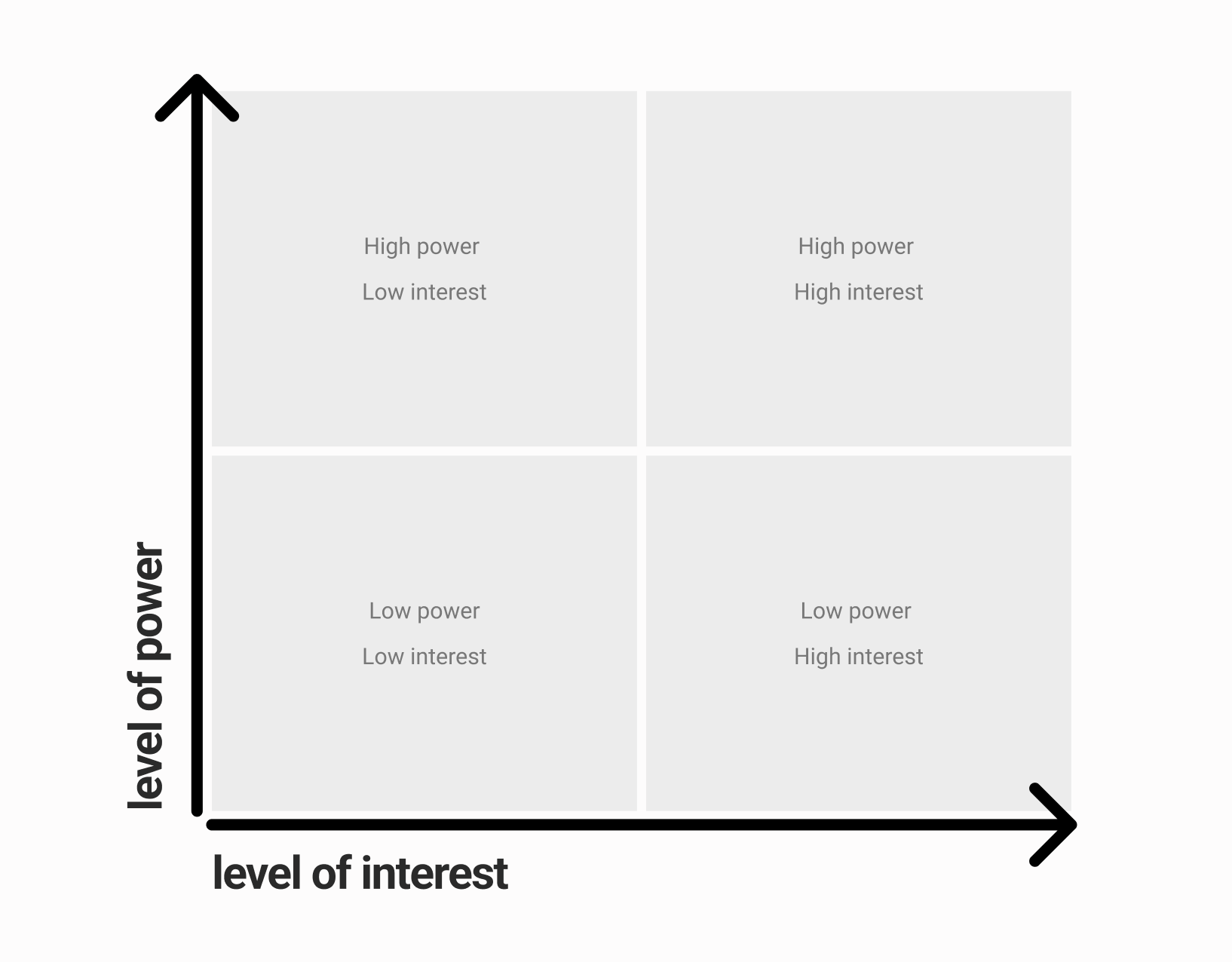
This matrix helps the team align expectations, plan communication, and understand where the real decision-making influence lies.
Step 3: Strategic Communication
The final step is about talking to these people. The goals are to gather input, clarify expectations, and spot risks early.
Here are some example questions you can ask:
- What type of updates do you want to receive during the project?
- What’s your current impression of the product or process?
- Is there anything you’d like us to keep in mind?
Equally important is watching the reaction. If someone responds with skepticism or negative feedback, reflect on how you could adjust communication or rebuild that connection.
But let’s be honest…
This process takes time. In most startups or small teams, it’s rarely done, not because it’s useless, but because the impact is hard to measure, and everything’s moving fast.
In large companies, such processes are more common because there’s time, structure, and culture that support these steps.
In smaller teams, stakeholder mapping only happens if:
- leadership is already familiar with the method
- or you’re (or someone) able to confidently explain why it’s worth doing
References:
 Rikke Friis Dam
My method: the alternative
Let’s say you don’t have time, team buy-in, or hours for a workshop with the whole team. Here’s what I recommend instead, and what I personally do when I join a new project or team.
Start small. Make it just for yourself.
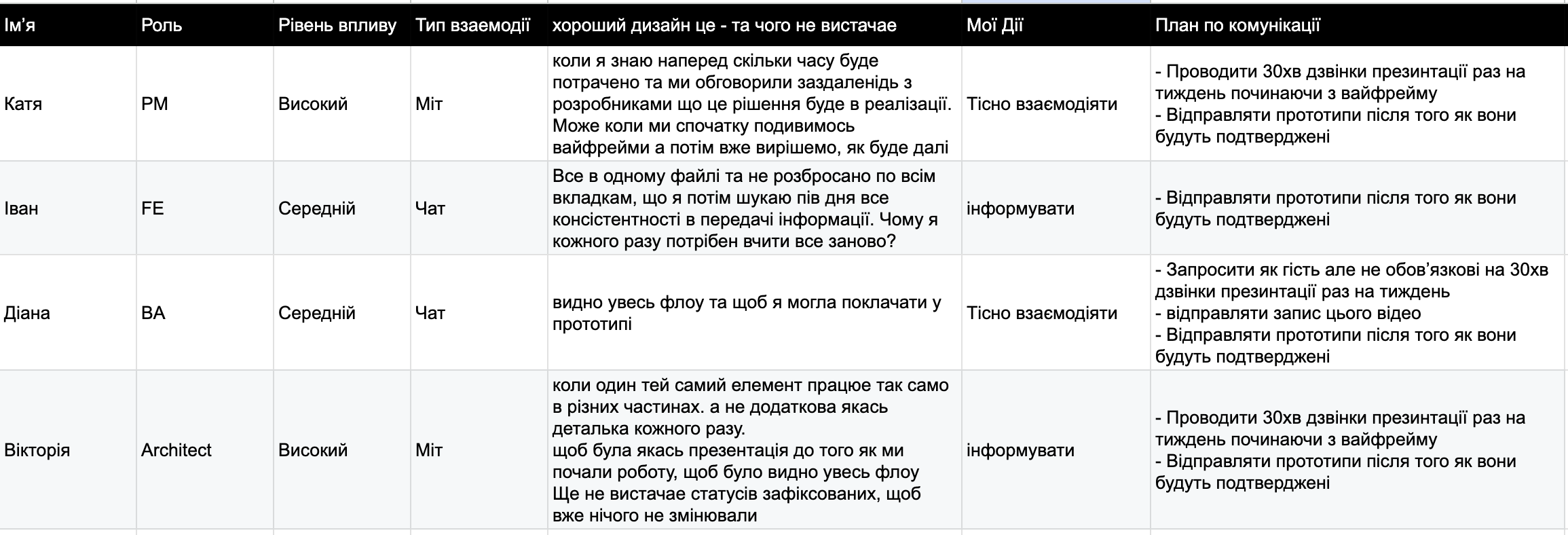
Even a simple map can bring clarity and confidence. It might look like a notebook page or a quick table in Notion.
Here’s how to start:
- List everyone who directly influences your work
- Group them by roles or relationship to the project
- Talk to at least one person from each group and ask:
- What does “good design” mean to you?
- How do you prefer to receive updates or information?
- Who influences your decisions?
- What could I do that would make your life easier right now?
- Take notes, not just of what they say, but how they say it. Notice words, energy, priorities, concerns.
What you’ll get is an informal understanding of their needs, expectations, and communication preferences. This gives you the language and empathy to explain your design decisions in a way that resonates with them.
This knowledge will help you frame your message in the future, show your awareness, and build stronger connections.
In the end, you’ll have written down strategies on how to communicate with the people who influence your work.
What’s next?
In the end, a stakeholder map isn’t about diagrams or following a certain method (I hate templates). It’s about context, connection, and clarity.
Even a simplified version can help you:
- build your reputation as a thoughtful designer or researcher
- improve internal communication
- avoid repeating missteps
- and feel more grounded in the ecosystem around you
If you’ve never tried this before — start small.
Write down 3 people and ask them one question.
You’ll be surprised by what you learn.
It’s a great alternative if you want to build trust, grow your communication skills, and start taking ownership of your process.
Even just writing down a few things in your own notes can make a big difference in how you interact with others